on peace
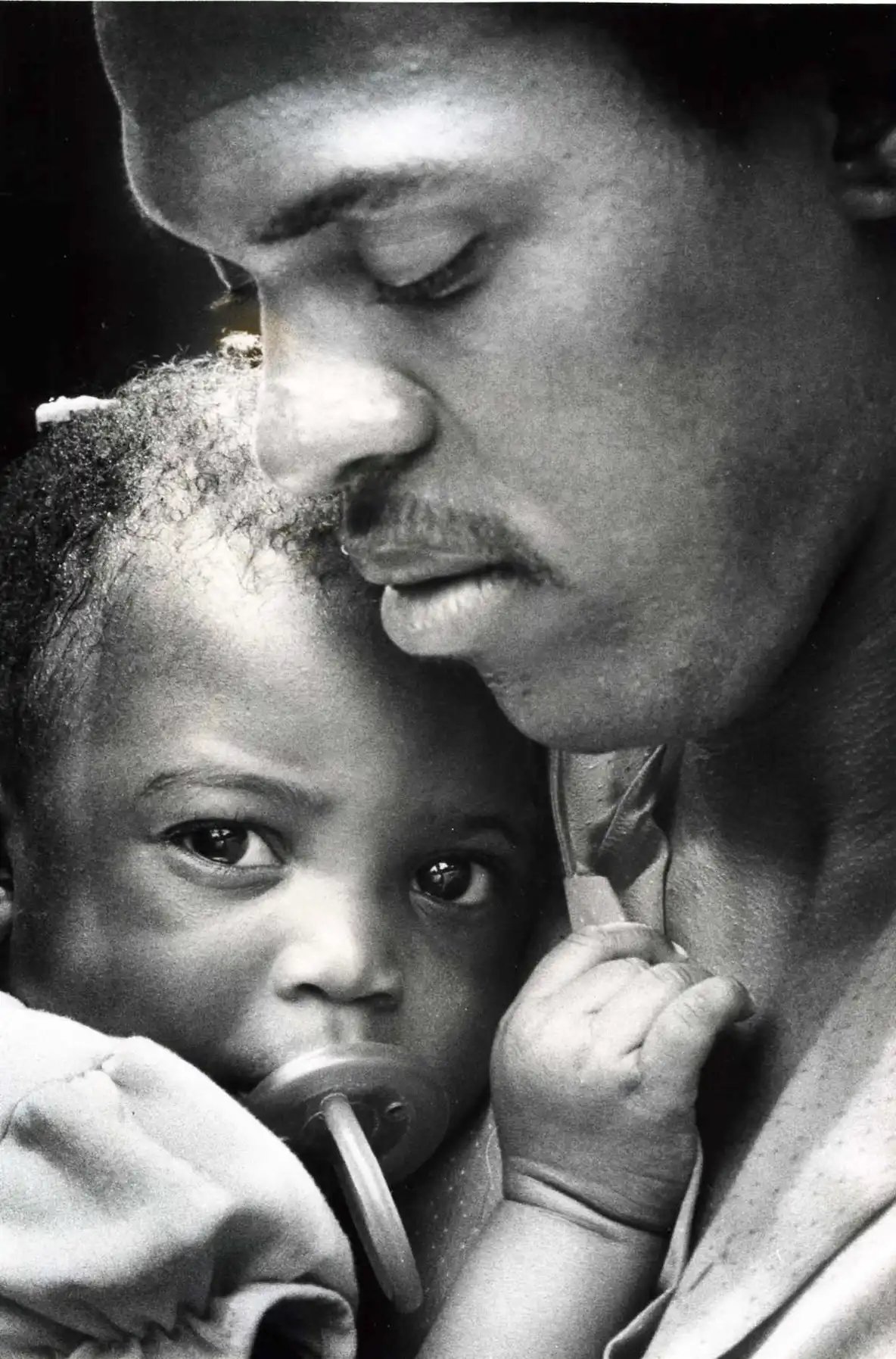
Where does peace actually begin?
I have spent years afraid of one question, and I have spent years building models, drawings, arguments, strategies and plans instead of asking it. All of the things I’ve built were maybe an elaborate way of not asking; what if we, humans, are simply built wrong? And what if that means none of it matters, not really, not in the long run, not in the actual timeline of whether we ever become a different, gentler version of ourselves?
It's interesting sometimes, to see humankind from a bit of a different perspective or from a bit of a distance. To watch us, pursuing our lives on this little pale blue dot in a vast universe. We seem to believe commuting to a serious job is important, we seem to think that large bank accounts will bring happiness and we play roles to make sure we steer away from all that might lead towards the realisation that we don't know why we live. Like ants we run around, seemingly chaotic yet still in patterns constructed for our survival. It makes me think of Bernard Werber's Empire of the Ants. And it makes me think of why we keep choosing war as the most reasonable way to fix disagreements. Werber's ants aren't built wrong, they're built exactly right for endless warfare, because for an ant colony, warfare against rival colonies isn't a bug, it's the mechanism that holds the colony together. So I wonder, are we humans similarly perfectly built to keep killing each other?
The question forced me to start writing. In the summer of 2024 I started scribbling, looking for a reply to those warfare mechanisms. What unfolded was an almost unconscious thought that this text belonged in a space beyond our idea of reality. And now, two years later, I've just finished writing my very first novel, a book that needed to be placed in free imagination. In the Corner of the Eye is a novel on humanity and how we might solve the large question of war, death and destruction. By gene editing and rewiring our human systems, the story is one that looks beyond what might seem possible. Not to deliver a prospect to follow, only to gently deliver the dark thought that we might never change. Unless we disobey.
Through the years, others have inspired me to find the "fix" for human violence. Immanuel Kant, in Perpetual Peace, locates it in institutions. He starts from the idea that men are by nature imperfect creatures, unsociable and untrustworthy, cursed by a love of glory, possession and power. He believes the crooked material of human nature can be channelled, through reason and constitutional design, toward an ideal that may never be fully reached but must be pursued as a duty. Peace, for Kant, is engineered — not biologically, but architecturally, through republics and federations. The famous line about humanity being "crooked timber" from which "nothing can be hammered quite straight" is basically the 18th-century version of the question my novel asks about human genetics: can matter itself be worked into something straighter, and what are the limits and ethics of trying?
Although Kant strongly argued for the idea of humanity being developed through institutions, I have myself often found more personal spaces just as valuable. Many years ago I read Dag Hammarskjöld's Markings, a short book with a deeply moving message. Through Hammarskjöld's view, peace is almost entirely in the interior. In the book he argues peace is in the disciplined surrender of the self to duty, in solitude, in the slow burning-away of ego before one can act rightly in the world. He was a man whose public role was literally to broker peace between nations (as UN Secretary-General), and his private diary shows that he understood that work as inseparable from an inner spiritual labour, a kind of self-engineering through devotion rather than genetics. He died in service to that work, in a plane crash on a peace mission, having given his entire adult life to it.
You wake from dreams of doom and - for a moment - you know: beyond all the noise and the gestures, the only real thing, love's calm unwavering flame in the half-light of an early dawn.
- Dag Hammarskjöld, Markings
And yet, even though I personally believe our deepest interiors are a source of solutions, there is a third space for peace to be found: in the collective body. I've seen this in civil society, in the accumulated, embodied resistance of ordinary people, especially among women, refusing tyranny through non-violence, over decades. Iranian human rights activist and Nobel Peace Prize laureate Narges Mohammadi speaks of being one of millions of proud and resilient women who have risen up against oppression, repression, discrimination and tyranny. She frames the movement not as a single dramatic act but as an accelerator of a long democratic process built on layered historical struggles. Peace here isn't designed from above or cultivated in solitude but rather enacted, repeatedly, at enormous personal cost, by bodies in public space.
In relation to the above three, I would like to propose a fourth space for peace to be explored, and that is — wildly — in biology itself. Through these last couple of years, I have not come up with a reply to the question, but I've ended up with an idea of peace that seems realistic in its imaginative and lawless aspect. My character Adan doesn't wait for institutions, doesn't wait for inner transformation to spread person by person, doesn't wait for civil society to reach critical mass. He goes straight to the source code. It's the most radical possible answer to Kant's problem: if humans really are made of crooked timber, why not just... re-cut the timber?
In the Corner of the Eye is available through early access at andthekiosk