Deckchairs
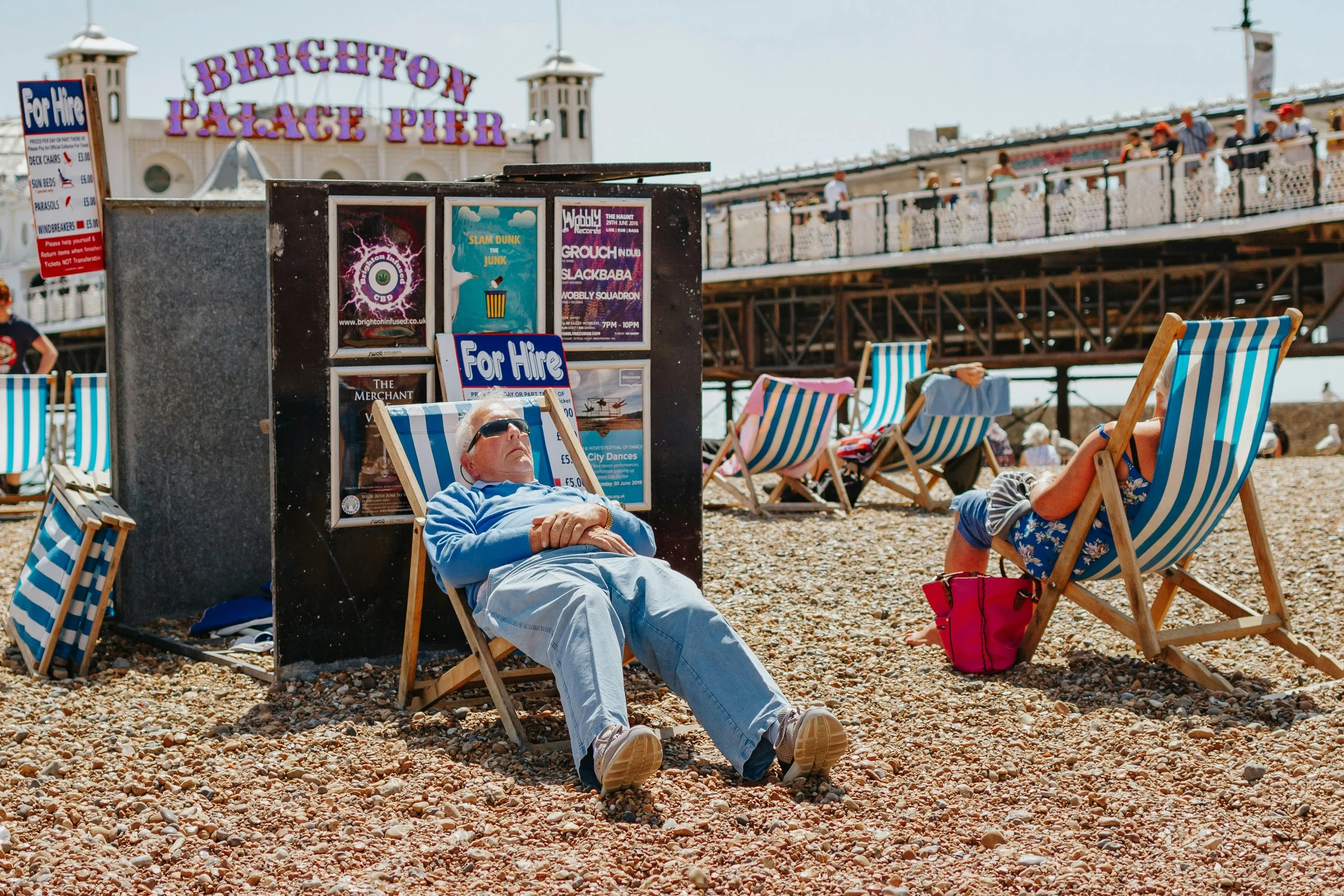
Photo by Alistair Macrobert.
There are millions of human-made products that exist without ever being questioned, or at least closely examined, through the lens of their framework. One can easily nominate the deckchair as one of the many excellent examples. If you don't instantly see the shape of this chair in front of you, it might be because there are various names for this thing. Some people call them beach chairs or folding chairs. Others name them loungers, patio chairs, outdoor chairs, sun loungers or beach recliners. A dear child has many names, as the Swedish saying goes, but which sounds awfully banal in translated form.
But let me paint a picture of the deckchair so that we are aligned. It is always foldable, which means you can fold it flat and store it easily. This construction also means that it can sometimes take a user far too long to manage to unfold the thing again. How many times have you spent trying to figure out what is up and down, back or front, of a folded deckchair? And then, once you finally think that you've got it, the thing that is supposed to hold the whole chair upright, the horizontal little beam you need to push into place, constantly seems to be on the wrong end. No matter which end you started with.
And then there's the weight. Of course the deckchair in metal is slightly lighter to carry around. Yet still we keep wanting to buy the wooden ones, as if they would be more sustainable. Or fit better into our interior design aesthetic. Or possibly give us that air of a timeless holiday image where quality and time off go hand in hand. Either way, metal or wood, it's joint by a simple sheet of fabric. I'm not saying the fabric as a material is simple, that would be to understate the complexity of textiles used for this thing. But its shape is plain, an uncomplicated rectangle that even a child could sew together. The complexity of the fabric lies in its production, with steps ranging from pesticide-covered cotton fields to harmful dyeing methods. But as we sit in the deckchair, that's not really on our minds. Why would it be?
What makes the deckchair an intriguing object is its construction for leisure and relaxation. Very few people seem to believe the deckchair is a functional seating system for their office. And never have I seen a whole class in a school, slightly reclined on deckchairs while taking their notes from a ranting professor, although I severely wish this had been the case. The deckchair is made for the luxurious moments of non-efficacy and lazy days. Its design was always meant to make a human take a deep breath and stretch out, generally facing the sun and covered in various forms of UV protection. It is simply a product made for idleness.
But as I am now sitting in one of them, somehow testing the ground of this inaction, it also hits me; the framework of the deckchair gives me no room for flexibility. I'm severely stuck, my body heavily seated in a position that requires abs to get up. Unlike a normal chair, that you could sit on in reverse, or sideways if you wish, the deckchair gives you no freedom to choose. It holds your body facing forward, and there is no wiggle room for a different take on what this object could be. I'm forced to stay and do what the chair has asked of me. I'm not free to question. Yet at the same time it tells me all is fine, I'm still on tranquil downtime. I should feel great, privileged as very few. But deep down I know: the deckchair is only here to fool the masses. The object we need, to pretend all is fine.